
Level 7 Diploma Environmental Management provides a nationally recognised qualification for individuals responsible for developing, implementing, and maintaining environmental management systems within an organisation. This qualification is ideal for managers seeking to enhance their expertise in environmental sustainability, compliance, and best practices.
Level 7 Diploma Environmental Management provides a nationally recognised qualification for individuals responsible for developing, implementing, and maintaining environmental management systems within an organisation. This qualification is ideal for managers seeking to enhance their expertise in environmental sustainability, compliance, and best practices.
The aims of this qualification are:
To allow candidates to develop knowledge of environmental and
sustainability management procedures.
• To provide candidates with opportunities to apply their knowledge of
environmental and sustainability management in their organisation.
• To facilitate career development for those interested in environmental and
sustainability management.
The awarding body for this qualification is ProQual AB. This qualification has been
approved for delivery in England, and to overseas candidates through approved
satellite centres. The regulatory body for this qualification is Ofqual, and this
qualification has been accredited onto the Regulated Qualification Framework
(RQF), and has been published in Ofqual’s Register of Qualifications.
| Qualification Title: | Level 7 Diploma in Environmental Management |
| Qualification Number: | 610/5231/0 |
| Level: | 6 |
| Total Qualification Time (TQT): | 1200 Hours 120 Credits |
| Guided Learning Hours (GLH): | 600 Hours |
| Assessment: | Pass / Fail |
| Internally assessed and verified by centre staff | |
| Externally verified by ProQual Verifiers | |
| Qualification Start Date: | 01/02/2025 |
| Qualification Review Date: | 01/02/2028 |
There are no formal academic entry requirements for this qualification. Centres should carry out an initial assessment of candidate skills and knowledge to identify and gaps and inform the assessment plan.
Candidates must be aged 19 years or older on the day they are registered for this qualification. Centres are reminded that no assessment should take place before candidates are registered.
Candidates who complete this qualification may progress onto a MSc Environmental Management or similar qualification.
This qualification consists of seven mandatory units. Candidates must complete all mandatory units to complete this qualification.
| Unit Number | Unit Title | Level | TQT | GLH |
|---|---|---|---|---|
| Mandatory Units – Candidates must complete all units in this group. | ||||
| J/651/4483 | Environmental Policy and Governance | 7 | 120 | 60 |
| K/651/4484 | Environmental Impact Assessment | 7 | 120 | 60 |
| L/651/4485 | Sustainable Development | 7 | 120 | 60 |
| M/651/4486 | Environmental Risk Management | 7 | 120 | 60 |
| R/651/4487 | Climate Change and Energy Management | 7 | 120 | 60 |
| T/651/4488 | Environmental Management Systems | 7 | 120 | 60 |
| Y/651/4489 | Sustainable Resource and Waste Management | 7 | 120 | 60 |
| F/651/4490 | Environmental Economics | 7 | 120 | 60 |
| H/651/4491 | Environmental Auditing and Reporting | 7 | 120 | 60 |
| J/651/4492 | Research Methods in Environmental Management | 7 | 120 | 60 |
Centres must be approved to deliver this qualification. If your centre is not approved
to deliver this qualification, please complete and submit the ProQual Additional
Qualification Approval Form
Materials produced by centres to support candidates should:
• Enable them to track their achievements as they progress through the
learning outcomes and assessment criteria.
• Provide information on where ProQual’s policies and procedures can be
viewed.
• Provide a means of enabling Internal and External Quality Assurance staff to
authenticate evidence.
Centres must have the appropriate equipment to enable candidates to carry out
the practical requirements of this qualification.
Candidates who achieve the requirements for this qualification will be awarded:
Level 7 Diploma in Environmental Management
Management
Claiming certificates
Centres may claim certificates for candidates who have been registered with
ProQual and who have successfully achieved the qualification. All certificates will be
issued to the centre for successful candidates.
Unit certificates
If a candidate does not achieve all of the units required for a qualification, the
centre may claim a unit certificate for the candidate which will list all of the units
achieved.
Replacement certificates
If a replacement certificate is required a request must be made to ProQual in
writing. Replacement certificates are labelled as such and are only provided when
the claim has been authenticated. Refer to the Fee Schedule for details of charges
for replacement.
Each candidate is required to produce a portfolio of evidence which demonstrates their achievement of all of the learning outcomes and assessment criteria for each unit.
Evidence can include:
Candidates must demonstrate the level of competence described in the units. Assessment is the process of measuring a candidate’s skill, knowledge and understanding against the standards set in the qualification.
Centre staff assessing this qualification must be occupationally competent and
qualified to make assessment decisions. Assessors who are suitably qualified may
hold a qualification such as, but not limited to:
• ProQual Level 3 Certificate in Teaching, Training and Assessment.
• ProQual Level 3 Award in Education and Training.
• ProQual Level 3 Award in Assessing Competence in the Work Environment.
(Suitable for assessment taking place in a working salon only.)
• ProQual Level 3 Award in Assessing Vocational Achievement.
(Suitable for assessment taking place in a simulated training environment
only.)
Candidate portfolios must be internally verified by centre staff who are
occupationally knowledgeable and qualified to make quality assurance decisions.
Internal verifiers who are suitably qualified may hold a qualification such as:
• ProQual Level 4 Award in the Internal QA of Assessment Processes and
Practice.
• ProQual Level 4 Certificate in Leading the Internal QA of Assessment
Processes and Practice.
Occupationally competent means capable of carrying out the full requirements
contained within a unit. Occupationally knowledgeable means possessing relevant
knowledge and understanding.
Adjustments to standard assessment arrangements are made on the individual
needs of candidates. ProQual’s Reasonable Adjustments Policy and Special
Consideration Policy sets out the steps to follow when implementing reasonable
adjustments and special considerations and the service that ProQual provides for
some of these arrangements.
Centres should contact ProQual for further information or queries about the contents
of the policy.
All enquiries relating to assessment or other decisions should be dealt with by
centres, with reference to ProQual’s Enquiries and Appeals Procedures.
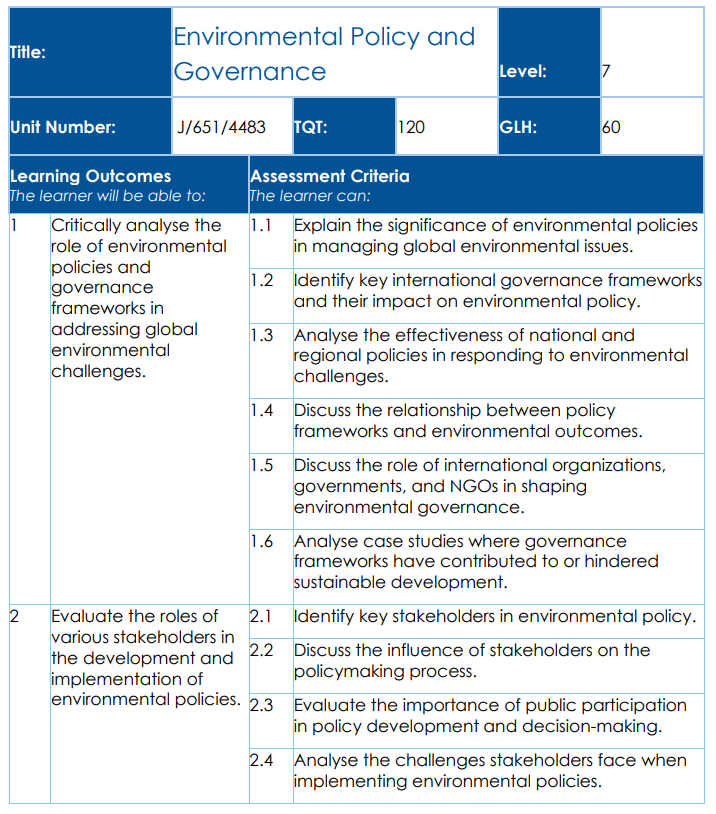
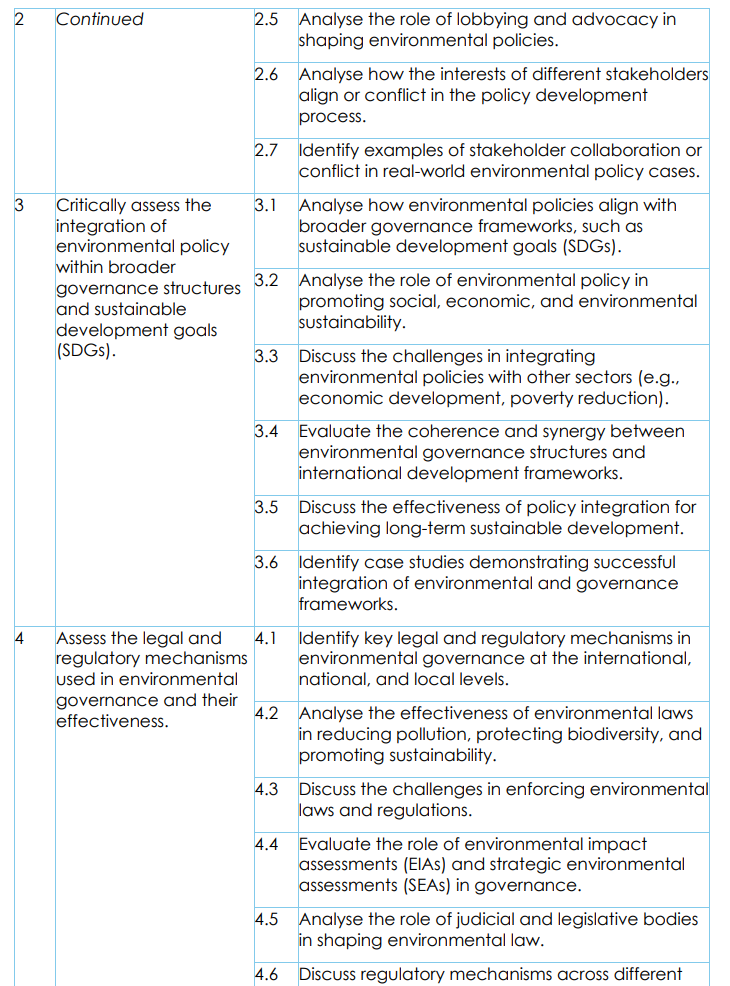
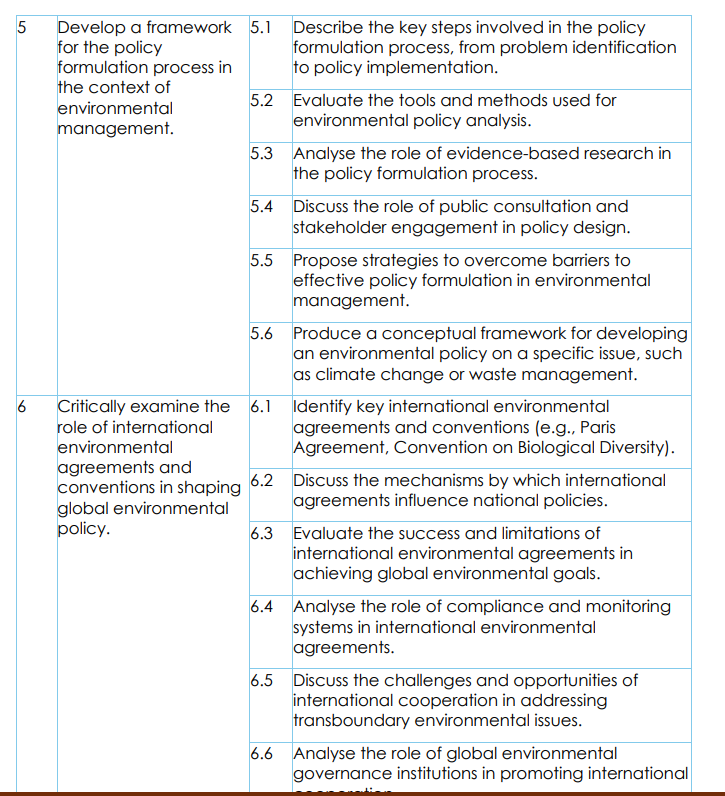
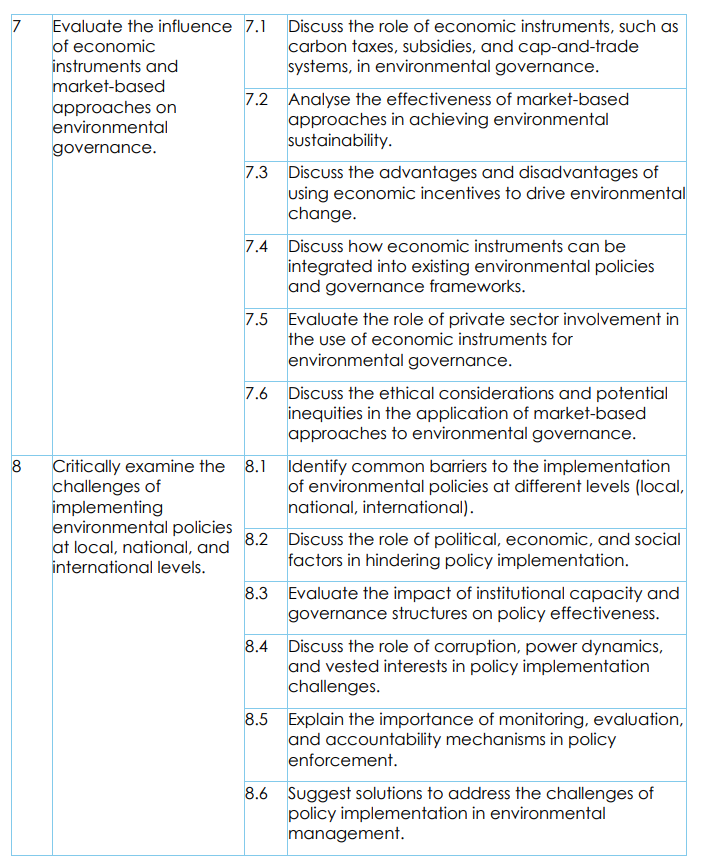
Learning outcomes 1, 2, 3, 4, 6, 7, and 8 are knowledge based. This means that
evidence is expected to take the form of candidate’s written work and/or records of
appropriate professional discussions.
Learning Outcome 5 is competency based. This means that the candidate is
expected to perform the tasks, and demonstrate the level of competence, outlined
in the assessment criteria. It is expected that evidence will be a combination
following:
• Photographic and/or video evidence of the candidate’s practical work.
• Assessor’s observation report.
• Expert witness testimony.
• Candidate reflection on own practical work.
• Production of organisational documents.
An observation report and witness testimony are differentiated as follows:
• An assessor’s report is completed by a qualified assessor who observes the
candidate carrying out practical work. The assessor will make assessment
decisions as they observe and record these in the report, alongside a
commentary of what they observe.
• A witness statement is completed by a suitably qualified or experienced
expert who observes the candidate carrying out practical work. The witness
statement will contain only a commentary of what has been observed. An
assessor must then use the witness statement, alongside any additional
evidence to make assessment decisions.
• In all cases, an assessor’s report is preferred as evidence over a witness
statement; as it is always better for an assessor to observe a candidate live.
Assessors may wish use to use a checklist or evidence matrix to organise and track
the assessment outcomes that have been achieved, but these do not, in
themselves, constitute evidence of achievement.
An assessor’s report or witness statement alone is unlikely to be sufficient evidence of
achievement. Reports and statements should always be accompanied by
photographic and/or video evidence or sit alongside real workplace documents
produced by the candidate.
The evidence produced by candidates may be real work they have produced in
the course of their employment or may be based on case studies and “simulated”
scenarios.